



Pharmacy Studies in Poland
Studying Pharmacy in Poland offers a clear pathway to earning a European Master of Pharmacy degree, recognised across all EU countries. Polish universities train specialists who are qualified to work in community pharmacies, pharmaceutical companies, hospitals, and research laboratories. Pharmacy programs follow international academic standards, last 5.5 years (11 semesters), and combine solid theoretical foundations with extensive practical training.
Poland is one of the most popular destinations for international students, combining high-quality medical education, affordable tuition fees, and the option to study in English or Polish.
Why Study Pharmacy in Poland?
European degree and professional recognition
Graduates are awarded the degree Magister Farmacji (Master of Pharmacy), which is recognised throughout the European Union and in many countries beyond the EU, subject to local licensing procedures.
Choice of language of instruction
International students can enrol in English- or Polish-taught Pharmacy programs, depending on their language skills and career plans.
Strong practical training
Universities cooperate closely with major pharmacies, hospitals, and pharmaceutical companies in Poland, providing students with hands-on experience during their studies.
Affordable tuition fees
Pharmacy programs in Poland typically cost 7 000–11 000 euros per year, which is significantly lower than in Western European countries.
Legal part-time work during studies
International students holding a valid residence permit are allowed to work alongside their studies, gaining experience and supporting living costs.
Structure of Studies at the Faculty of Pharmacy
The Pharmacy program lasts 5.5 years, after which graduates are awarded the Master of Pharmacy degree and become eligible for professional practice following the required post-graduate steps.
- 1–2 years:fundamentals of chemistry, biology, botany, physiology, anatomy, biophysics, and medical terminology.
- 3–4 years:pharmaceutical chemistry, pharmacognosy, pharmacology, drug formulation technology, toxicology, and pharmacy practice.
- 5–5.5 years:clinical pharmacy, pharmacoeconomics, pharmaceutical management, professional internship, and master’s thesis.
After completing the academic program, graduates undertake a mandatory professional internship and pass the State Pharmaceutical Examination (Państwowy Egzamin Farmaceutyczny, PEF), which confirms professional qualifications and grants the right to practise in pharmacies and clinical settings.
Top Universities in Poland for Pharmacy
1. Warsaw Medical University (WUM) - One of the most prestigious medical universities in the country. The Master of Pharmacy program is offered in Polish and English. Strong emphasis is placed on practical training in the university pharmacy and research centres.
Tuition fee: 10 500–11 000 euros per year.
2. Poznan University of Medical Sciences (PUMS) - Offers an English-taught Pharmacy program (5.5-year master’s program). The curriculum integrates chemistry, biology, medicine, and clinical practice.
Tuition fee: around 10 000 euros per year.
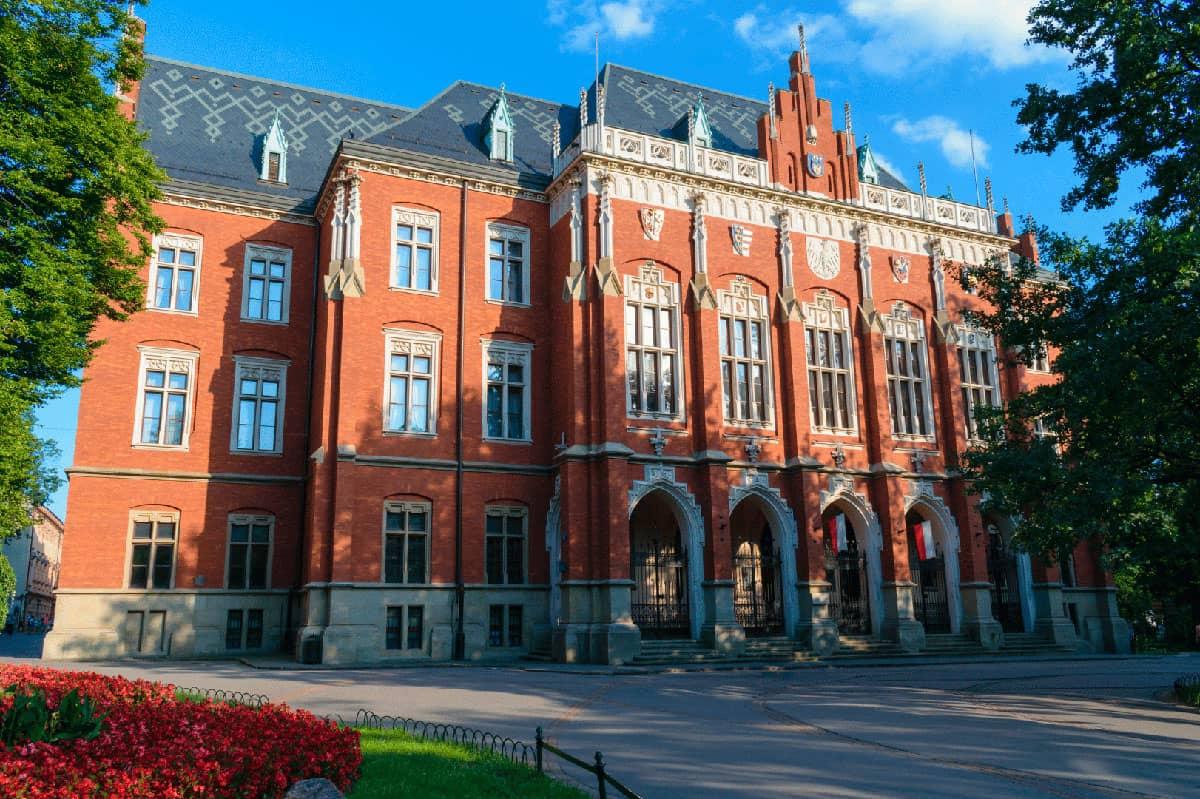
3. Jagiellonian University (Kraków) - One of the oldest universities in Europe with a modern pharmaceutical school at Collegium Medicum. Programs are available in Polish and English.
Tuition fee: from 9 000 euros per year.
4. Medical University of Gdańsk (MUG) - Offers an English-taught Master of Pharmacy program (5.5 years). Focus areas include pharmacology, drug formulation analysis, and clinical research.
Tuition fee: 9 500–10 500 euros per year.
5. Wroclaw Medical University (UMW) - A strong Faculty of Pharmacy with modern laboratories and opportunities for internships with pharmaceutical companies in Poland and across the EU.
Tuition fee: around 8 500 euros per year.
Admission to Pharmacy in Poland
Admission to Pharmacy (Master of Pharmacy) programs in Poland is an attractive option for students aiming to obtain a European pharmaceutical degree and build a career in the international healthcare and pharmaceutical sector. Competition for Pharmacy is generally lower than for Medicine or Dentistry, but academic requirements and admission standards remain high. More detailed information about general admission requirements you can find here.
Step by Step Admission Process
The admission procedure for English-taught Pharmacy programs follows a standard structure across Polish medical universities:
1️⃣ Online registration through the university admission system (IRK).
2️⃣ Submission of required documents, including a secondary school diploma with grades in Biology and Chemistry(and Mathematics, if applicable), translated into English, a passport copy, photo, and proof of English proficiency.
3️⃣ Entrance examination — the key academic stage of selection.
4️⃣ Online interview (required by some universities) to assess motivation and language skills.
5️⃣ Publication of the ranking list and issuance of the admission offer.
Applicants with EU Secondary Education
Applicants who completed secondary education within the European Union may be qualified either through converted school-leaving exam results (such as A-levels or IB) or through the internal entrance examination, depending on how their educational background is classified by the university. When the exam-based track is applied, candidates are ranked solely on the basis of the entrance exam results.
Applicants with Non-EU Secondary Education
Applicants who obtained their secondary education outside the EU are qualified exclusively on the basis of the internal entrance examination. School certificates are used only to confirm eligibility for higher education and do not affect the ranking.
Entrance Examination for Pharmacy
The entrance examination for Pharmacy is similar in structure to medical entrance exams. It primarily assesses knowledge in Biology and Chemistry; at some universities, basic Mathematics or Physics may also be included.
The exam is conducted as a multiple-choice test, usually consisting of 60–100 questions in total, and lasts approximately 90 minutes. The language of the exam is English for English-taught programs. Examinations are most often held online via secure platforms, such as Testportal or Safe Exam Browser, with identity verification and continuous video monitoring (proctoring).
Each subject requires a minimum of 30% to pass; however, due to competition, realistic admission scores typically start at 75% or higher. In practice, the average competitive level nationwide is around 70%, reflecting solid upper-secondary knowledge and the ability to apply it in medical and chemical contexts.
Competition for English-taught Pharmacy programs remains high, particularly at major universities. Applicants scoring below 70–75% are rarely admitted to the main list and are usually placed on reserve lists without guaranteed enrolment.
Recognition of School Certificates
National school-leaving exams from non-EU countries are accepted only as proof of completed secondary education and do not influence admission ranking.Some universities (including Warsaw Medical University and the Medical University of Gdańsk) may allow recognition of entrance exam results taken earlier at another Polish university, provided the test was conducted according to CKE standards.
Preparation Tips
✔️ Begin exam preparation at least 3–4 months in advance.
✔️ Revise key topics in cell biology, human anatomy basics, general and organic chemistry.
✔️ Practise with official sample tests published by universities, as their structure closely reflects real exams.
✔️ Consider a Foundation Year / Premed course, which helps adapt to the Polish exam format and medical terminology and significantly improves admission readiness.
Career Prospects and Employment After Graduation
After completing the academic program, graduates undertake a 6-month professional internship (staż apteczny) and pass the State Pharmaceutical Examination (Państwowy Egzamin Farmaceutyczny). Upon successful completion, graduates obtain a professional licence and may work in community pharmacies, pharmaceutical companies, hospitals, research centres, and laboratories across the EU.
✔️ Average pharmacist salary in Poland: 1 200–2 500 euros per month, depending on region and experience.
✔️ Senior pharmacists and pharmacy managers: 3 000–4 000 euros per month.
✔️ Large pharmaceutical companies and international corporations: up to 5 000 euros per month or higher, depending on role and country.
A Polish Master of Pharmacy degree also enables graduates to work in other EU countries, including Germany, the Czech Republic, the Netherlands, and Scandinavian countries, after completing the standard professional registration process, without the need for retraining.

Advantages of Studying Pharmacy in Poland
✔️ Choice of language of instruction — programs available in English or Polish.
✔️ EU-wide diploma recognition and strong employment prospects across Europe.
✔️ Modern laboratories and a strong focus on practical, profession-oriented training.
✔️ Participation in international grants and exchange programs (such as NAWA and Erasmus+).
✔️ Opportunity to work during studies and apply for scholarships.
✔️ Comprehensive support and guidance from AcademGo throughout the admission process.
Frequently Asked Questions
