


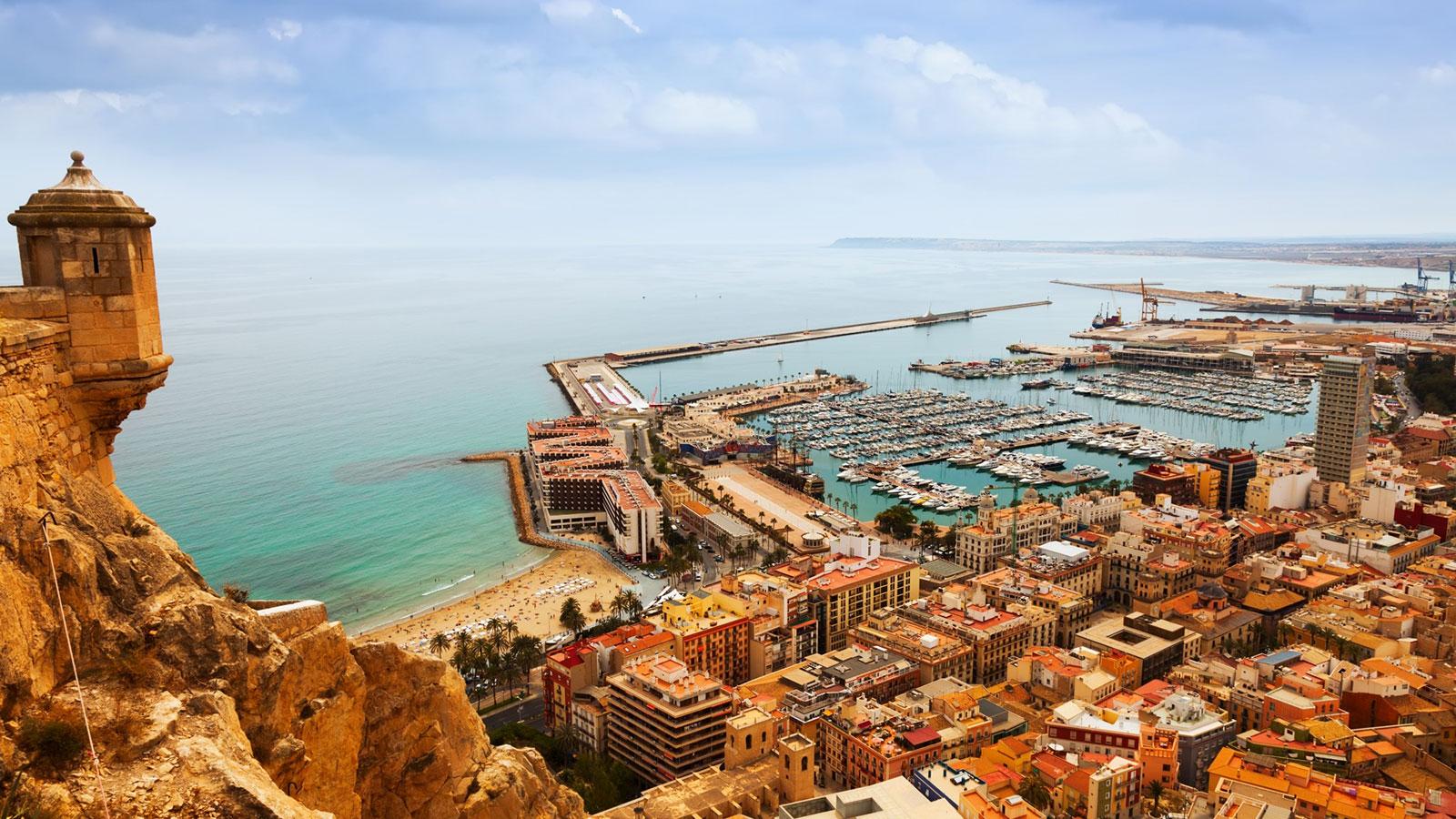
Study in Spain: An Honest Guide for International Students
Real prices, the admission route for non-EU applicants, visa rules and the catches worth knowing before you pay a deposit.
Study in Spain if you want an official Spanish degree, the right to work up to 30 hours a week while you study, and a legal way to stay and look for work after graduation. Public universities can be surprisingly affordable: the University of Barcelona charges non-EU bachelor's students the same credit price as local students, about €1,200 a year. Private universities offer many more programs in English, at a higher price.
Spain is a harder fit if your goal is medicine taught in English. None of the three private universities we work with (UCAM, Universidad Europea and CEU San Pablo) teaches medicine fully in English. CEU San Pablo has a bilingual track, but it still requires Spanish at B2. Most public-university bachelor's programs are taught in Spanish, and in Catalonia largely in Catalan.
Non-EU bachelor's applicants also face a step many countries don't have: homologation of the school certificate by the Spanish Ministry of Education. Master's applicants skip it. Below you will find costs by level, the admission route, the student visa, and the catches we explain to every student before they pay a deposit.
How much does it cost to study in Spain
Tuition depends on three things: public or private, the region, and the level of study. Public universities in Madrid charge non-EU students without residence a much higher rate than EU students, and a student stay authorization (estancia por estudios) does not count as residence for fee purposes. In Catalonia, each public university sets its own price for non-EU students.
| Level and type | Approximate tuition per year, non-EU (current price lists) | What drives the price |
|---|---|---|
Bachelor's, public, Catalonia | about €1,200–7,000 | University of Barcelona about €1,200 with fees; UPC about €1,800; UPF about €6,800–7,000 |
Bachelor's, public, Madrid | about €6,800–8,200 | Complutense charges by field: humanities cheapest, health sciences most expensive |
Bachelor's in English, private (business, psychology, international relations) | about €7,300–17,600 | Murcia campuses are at the lower end, Madrid programs at the upper end |
Medicine and dentistry, private | about €18,900–24,100 | Medicine is taught in Spanish or bilingually; dentistry in English costs the most |
Master's, public (standard programs) | about €4,900–5,100 | Complutense and University of Barcelona charge non-EU students €82–84 per credit |
Master's in English, private | about €11,800–12,400 | Example: data, project management and logistics programs at Universidad Europea, Madrid |
Private universities add a one-off place reservation deposit, roughly €950–3,600 depending on the program, plus a registration or file-opening fee in the first year. Public master's programs that qualify you for a regulated profession (law, health psychology) cost more per credit than standard ones. In Valencia, UPV charges new non-EU master's students without residence double the standard price. Prices for the next academic year are not published yet, so treat these figures as a guide.
Types of universities in Spain
Public universities are run by the regions; private ones include several Catholic universities. The main differences are language, price and how you get in. By QS World University Rankings, the University of Barcelona is first in Spain (=165) and Complutense second (199).
| Public, Madrid (e.g. Complutense) | Public, Catalonia (e.g. University of Barcelona) | Private (UCAM, Universidad Europea, CEU San Pablo) | |
|---|---|---|---|
Main language | Spanish; B2 required for non-native speakers | Catalan and Spanish | Spanish, with many programs in English |
Bachelor's tuition, non-EU | about €6,800–8,200 | about €1,200 at UB | about €7,300–24,100 |
Bachelor's admission | Homologation, UNEDasiss exams (PCE), regional application | Homologation, then PAU or UNEDasiss PCE exams | Homologation, university's own tests and interview |
English-taught options | Very few at bachelor's level | Mostly at master's level | Business, psychology, dentistry and more |
Who submits the application | You, through the official portals | You, through the official portals | You or with our help, directly to the university |
Madrid's six public universities share one application system (Distrito Único), where you can list up to 12 programs in order of preference. Private universities admit on a rolling basis and run their own entrance tests, but they still require homologation for non-EU school certificates.
Where Spain's universities are
Campus cities of the universities covered on this page
Madrid
Barcelona
- University of Barcelona
- UPC
- UPF
Murcia
Valencia
Alicante
Málaga

Let's review your case in a free consultation
We will match a country, university and programme to your documents and budget, and explain deadlines and the visa.
or message us


Admission requirements
The non-EU bachelor's route has several steps, each with its own timeline. The minimum age for a university student stay is 17. Language requirements are set by each university or program, not by law; Spanish-taught programs usually ask for B1–B2, and Complutense requires B2.
Bachelor's admission: step by step
1
Shortlist programs and check the language — confirm whether the program is taught in Spanish, Catalan or English and which certificate it accepts.
2
Prepare your documents — your school certificate and grades for at least the last three years, with an apostille or consular legalization and an official translation.
3
Apply for homologation — the Ministry of Education (not UNEDasiss) converts your certificate to the Spanish título de Bachiller. The legal deadline is 3 months from a complete file, and the fee is about €48.
4
Get UNEDasiss accreditation and sit the PCE exams — needed for public universities. Without PCE your admission score is capped at 6 out of 10, and in Madrid homologation without passed PCE keeps you out of the main application phase.
5
Apply to universities — public ones through the regional application (in the last intake, Madrid accepted foreign-system applicants until July 6 and Catalonia from June 2 to 26); private ones directly, with their own tests. While homologation is pending, many universities allow conditional enrollment.
6
Pay the deposit and apply for the visa — use the admission letter to apply at the consulate at least 2 months before classes start.
The next UNEDasiss calendar has not been published yet. Based on the last intake, expect PCE registration in March–April and exams in late May; online accreditation ran from February 4 to December 1. Holders of the IB Diploma and European Baccalaureate do not need homologation.
For a master's degree, you do not need to homologate your bachelor's diploma. The university checks its level and that it gives access to a master's in your home country, sometimes for a fee (€218.15 at the University of Barcelona). Apply in the first round: in the last intake, Complutense's first round ran from January 28 to February 20, and the University of Barcelona opened applications on January 15. More on our master's in Spain page and the full admission requirements guide.
Document legalization by country
- Apostille: India, Pakistan (since March 9, 2023), Bangladesh (since March 30, 2025), Saudi Arabia, Oman, Bahrain, Kazakhstan, Uzbekistan, Kyrgyzstan and Azerbaijan.
- Legalization chain (Ministry of Education, then Ministry of Foreign Affairs, then the Spanish consulate): Nigeria, Egypt, the UAE, Qatar and Kuwait.
- Official translation for homologation: a sworn translator in Spain, a Spanish consulate abroad, your country's consulate in Spain, or an official translator abroad with a legalized signature.
Student visa and documents
Students from outside the EU apply for a long-stay student visa at the Spanish consulate, at least 2 months before classes start. The immigration office decides on the authorization within 7 days, and the consulate then issues the visa within 1 month. After arrival, if you stay longer than 6 months, you request your student card (TIE) from the police within 1 month. For university studies, the authorization covers the full official length of the program; you confirm your enrollment at the start of each academic year.
The core documents are:
Core visa documents
- Passport valid for at least 1 more year.
- Admission letter from a recognized Spanish university.
- Proof of funds: at least €600 for each month of stay (IPREM), on top of tuition.
- Health insurance from an insurer authorized in Spain, with coverage at least equal to the Spanish public health system; the Spanish embassy in Dhaka specifies no co-payments, no waiting periods and no coverage limit, while repatriation cover is not required.
- Criminal record certificate if you are 18 or older, from every country you lived in during the last 5 years.
- Medical certificate (required for the visa, not for applications made inside Spain).
Procedures differ by consulate; our Spain student visa guide covers them step by step.
Find your programme in 2 minutes
What to know before you apply
These points change plans most often, so we raise them at the first consultation.
Entering as a tourist and applying from inside Spain
You can switch to a student stay from inside Spain only for university-level studies, not for language courses. You must be in Spain legally and apply at least 2 months before classes start and at least 2 months before your legal stay ends. With a 90-day Schengen visa or visa-free entry, that means applying within roughly the first 30 days after arrival, and the decision takes up to 2 months. If you plan a Spanish language course first, you need a student visa from the consulate. Treat the consulate route as the default.
Language of teaching
Most public-university programs are taught in Spanish. In Catalonia, public universities follow an official plan to teach in Catalan; the target is 80% of class hours for bachelor's programs. English-taught dentistry exists, but clinical work is in Spanish: at Universidad Europea, clinical practice in years 4–5 is in Spanish, and UCAM requires Spanish B2 before the third year. Start Spanish early; the Instituto Cervantes runs seven DELE exam sessions a year, from February to November.
Official degrees and títulos propios
Spanish universities award official degrees (título oficial) and their own degrees (título propio). Under the 2024 immigration regulation, both qualify for a student stay if the university is recognized, so both give you the automatic right to work while you study. Foreign add-on diplomas are different: CEU San Pablo states that the foreign partner certificates in its international dual degrees have no official value in Spain. If staying to work after graduation is part of your plan, choose an official degree and check its registration before paying.
The money you must show
The legal minimum is 100% of IPREM for each month of stay. IPREM is €600 a month, so a full year means €7,200. Add 75% of IPREM for the first family member and 50% for each additional one (€12,600 a year with one family member). Tuition is not included in this amount. Scholarships and documented sponsorship count, and if your accommodation is fully prepaid for the whole stay, this requirement does not apply. Higher amounts you may see online are estimates, not the legal rule.
Housing in Madrid and Barcelona
A room in a shared apartment costs about €550 a month in Madrid and about €600 in Barcelona, against a national average of about €425. A one-bedroom apartment outside the center is about €1,044 in Madrid and €1,143 in Barcelona. Start looking once you have an admission letter, or consider Murcia or Valencia.
Living costs, work and student life
Estimated monthly costs for a student renting a room in a shared apartment (Numbeo and idealista data):
| City | Expenses without rent | Room in shared apartment | Estimated total per month | Monthly transit pass |
|---|---|---|---|---|
Madrid | about €818 | about €550 | about €1,100–1,450 | about €33 |
Barcelona | about €827 | about €600 | about €1,100–1,450 | about €22.80 |
Valencia | about €728 | no city figure | about €950–1,200 | about €35 |
University students can work up to 30 hours a week, as employees or self-employed, without a separate work permit, as long as the job does not interfere with studies. Exceeding the limit can cancel your student stay. The right applies within the autonomous community (region) that issued your authorization, plus border towns in neighboring regions. Curricular internships need no permit. If you work legally and are registered with Social Security, that registration replaces private health insurance. Students on language courses do not get automatic work rights, and family members who join a student cannot work.
After graduation, you can switch to a work residence permit without leaving Spain. There is no labor-market test, and a permanent full-time contract is not required: part-time work is allowed if annual pay reaches the minimum wage for full-time work (currently €17,094 a year). You apply between 2 months before and 3 months after your studies end, and you may work full time once the application is accepted for processing. Graduates with at least a bachelor's-level degree (EQF level 6) can instead request a job-search or business permit for up to 24 months; the decision comes within 20 days, and no answer means approval. This option is not available to language-course students or to students funded by development-aid scholarships. More on our study and work in Spain page.
You will not be the only foreigner on campus: 12.4% of Complutense students are international, and 12% at the University of Barcelona (Times Higher Education data).
Universities we work with
Five universities cover the main options: three private universities with English-taught programs and two large public ones.
- **UCAM** — a private Catholic university with campuses in Murcia, Cartagena, Madrid and Málaga. English-taught bachelor's programs in business, psychology, international relations, sport sciences and dentistry; medicine is taught in Spanish only.
- **Universidad Europea** — a private network with campuses in Madrid, Valencia, Alicante, Málaga and the Canary Islands; each university in the network issues degrees in its own name. A wide range of English-taught programs; medicine is taught in Spanish.
- **CEU San Pablo University** — a private Catholic university in Madrid with bilingual medicine (Spanish B2 required) and dentistry in English. For medicine, the first round runs from September 9 to October 8 of the year before entry, with the entrance test on October 16, in person or online; later rounds follow in January and April.
- **Complutense University of Madrid** — a public university, 199th in QS, teaching mainly in Spanish. Its Early Admission route for applicants living outside Spain requires no PCE; in the last intake it offered 462 places in 43 programs, with no medicine.
- **University of Barcelona** — first in Spain in QS and THE, with bachelor's tuition of about €1,200 a year for non-EU students. Teaching is in Catalan and Spanish, and entrance exams are mandatory.
At Complutense and the University of Barcelona, you submit your application yourself through the official portals. We assess your chances, prepare documents and certificates, check the application before you send it, and build a backup plan at other universities. If you are also weighing another EU country, compare Spain with Poland.
Nine destinations in one table
Tuition and living costs, language of study, entry rules, work rights and degree recognition across nine destinations. Official prices with the year stated.
- Tuition and living costs, from $500 a year in Türkiye to €24,000 for medicine in Cyprus
- Entry, status and work rights for each destination
- An honest take on degree recognition, including North Cyprus and Georgia
- Where medicine is taught in English
Universities in Spain
The universities we work with: each page has fees, entry requirements and the application steps.
Studying at CEU San Pablo University in Madrid
Universidad Complutense de Madrid for International Students

Study at Universidad Europea
UCAM
Other study destinations
The same budget buys a different outcome elsewhere — see the other destinations.
 Polandfrom €1,500 a year at private universities; medicine from €12,000
 Turkeyfrom $500 a year at public, from $4,000 at private universities
 UAEabout AED 60,000–80,000 a year at branch campuses
 Malaysiaabout RM 35,000–45,000 a year at private universities
 Italyfrom €160 a year at public universities (income-based, ISEE)
 Hungaryabout €6,000–10,000 a year in English
 GeorgiaMD in English: $5,900–6,500 at private, $8,000 at public universities
 North Cyprus$4,450–6,400 a year at EMU (public); €2,800–4,500 at private universities after the standard discount
 Cyprusabout €9,000–11,820 a year at private universities; medicine €23,000–24,000
Not sure which route fits your grades, budget and language level? Book a free consultation. We will check your documents, shortlist 3–4 programs that match your profile, and map your visa route with realistic dates for the upcoming intake. Write to us via the form on the contacts page, WhatsApp or Telegram.